Travel guide
Why You Should Visit Bangladesh: The World's Most Underrated Travel Destination
Updated on September 2026 · Reading duration of 6 minutes.
Bangladesh is extraordinary precisely because it's unvisited—no tour buses, no crowded resorts, genuine wildness, and a people known for extraordinary hospitality (emphasised twice, per your request).
Why You Should Visit Bangladesh
The Last Great Undiscovered Destination
Somewhere between the chaos of India and the quiet of Bhutan lies a country most Western travellers have never seriously considered. Bangladesh—roughly the size of England and Wales, squeezed into a corner of South Asia—packs more rivers, more history, more wildlife, and more warmth per square kilometer than almost anywhere else on Earth. Yet it receives a fraction of the visitors its neighbors do.
That is precisely why you should go.
This is a country where you will not queue behind tour buses. Where a beach stretches further than your eye can see and nobody is selling you sunglasses every ten meters. Where the world's largest mangrove forest still feels genuinely wild, and where the people—widely described as the most welcoming and hospitable on Earth—will treat you less like a tourist and more like a long-lost relative. Bangladesh is not a destination you visit because it is easy. You visit it because it is extraordinary and because the handful of travelers who make the journey come home changed.
So let us walk you through why Bangladesh deserves a place on your map.
The World's Longest Natural Sea Beach
Start at Cox's Bazar, a name that should be as famous as Bondi or Waikiki. Stretching 120 kilometers along the Bay of Bengal, it is the longest unbroken natural sea beach in the world. The sand is fine and golden, the water warm, and the horizon uncluttered. Locals gather at sunset for beach cricket, kites, and fried snacks; the atmosphere is joyful rather than resort-slick.
Just a few hours further south lies Saint Martin's Island, Bangladesh's only coral island and its southernmost point. Coconut palms, clear shallow water, fishing boats painted in bright colors, and an unhurried rhythm of life that makes you forget your own calendar. Snorkelling, fresh lobster grilled on the beach, and nights under a sky so full of stars it feels curated.
For something even rarer, head to Kuakata, a 30-kilometer stretch of beach where—because of its unique geography—you can watch the sun rise over the Bay of Bengal in the morning and set into the same ocean in the evening. Only a handful of places on Earth offer this. Add in the Buddhist and Hindu fishing communities along its shore, and you have a beach experience no resort chain can package.
The Sundarbans: Where Tigers Still Rule
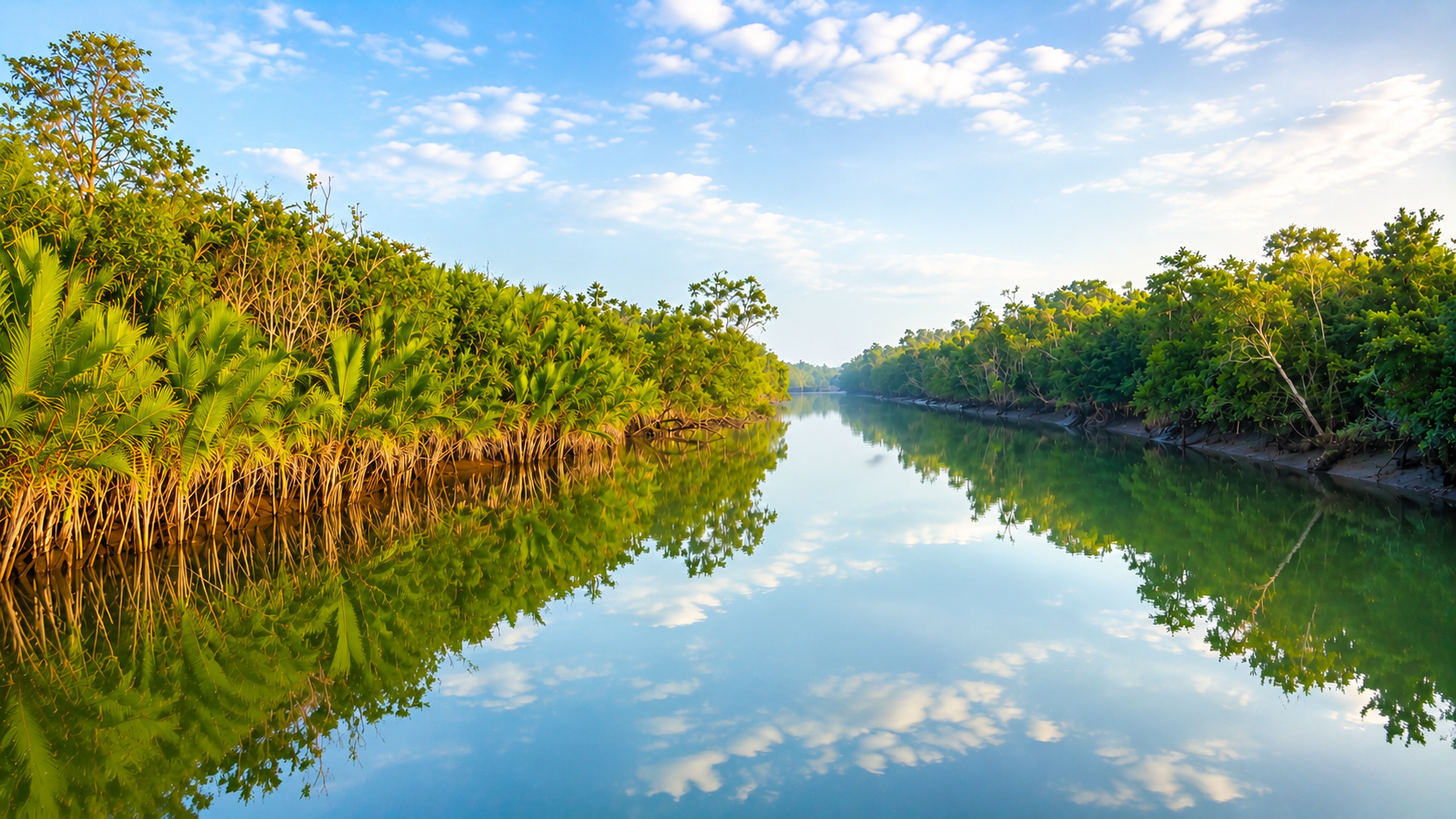
If Bangladesh has one icon, it is the Royal Bengal tiger—and the only place on Earth it calls home is the Sundarbans, the largest mangrove forest in the world. A UNESCO World Heritage Site the size of a small country, this is not a zoo. This is genuinely wild territory: tidal rivers, dense mud-banked forest, crocodiles sliding off sandbanks, spotted deer frozen mid-step, and—if luck is on your side—the flash of orange between the trees.
You travel the Sundarbans by boat, which is the only way to travel it. Days are spent gliding through silent channels, listening for the warning calls of deer that signal a tiger nearby. Nights bring the sound of the forest itself. It is one of the great wildlife experiences of Asia, and unlike the safari parks of East Africa, you will share it with almost nobody.
Even the journey there is an experience: a cruise through the delta's vast network of rivers, past fishing villages on stilts, past the wild honey collectors who risk their lives every season, and past dolphins surfacing in the channels. The Sundarbans is not a comfortable afternoon trip. It is an expedition—and that is exactly why you will never forget it.
The Green Mountains of the Hill Tracts
When you imagine Bangladesh, you probably picture flat, flooded plains. But head southeast to the Chittagong Hill Tracts and the country transforms completely. This is a landscape of emerald ridgelines, waterfalls, and cloud forests — home to eleven distinct indigenous peoples, each with their own language, dress, and traditions.
Bandarban is the adventure base: trek up to the summit of Nilgiri, one of the highest accessible points in Bangladesh, for views over ranges folding into Myanmar. Hike to Boga Lake, a high-altitude crater lake that local legends say was formed by the fall of a mythical dragon. Cross bamboo suspension bridges swaying over deep valleys, visit villages where the Marma and Bawm people welcome you with slow smiles, and stay in simple lodges above clouds that drift through the valleys each morning.
Nearby Rangamati offers a different rhythm: the huge artificial Kaptai Lake, studded with forested islands, where you can kayak, swim, and visit the lakeside communities of the Chakma people. The Hill Tracts are quiet, green, and profoundly different from the rest of Bangladesh—a reminder that this small country contains multitudes.
Tea Country: Srimangal and the Sylhet Hills
In the northeast, the land rises into the gentle hills of Sylhet, where the air smells of tea. Srimangal is the tea capital of Bangladesh, surrounded by rolling estates that have been producing leaves for over 150 years. Wake early and walk through plantations at dawn, when pickers work the slopes in colorful saris and the low sun burns the mist off the valley.
Nearby, Lawachara National Park shelters hoolock gibbons—listen for their dawn songs echoing through the canopy—as well as slow lorises, leopards, and more than 250 species of birds. A couple of hours away, Ratargul is Bangladesh's only freshwater swamp forest: glide by boat through a submerged forest of gnarled trees rising out of dark, mirror-still water. It feels prehistoric, the kind of place you expect a dinosaur to wander out of.
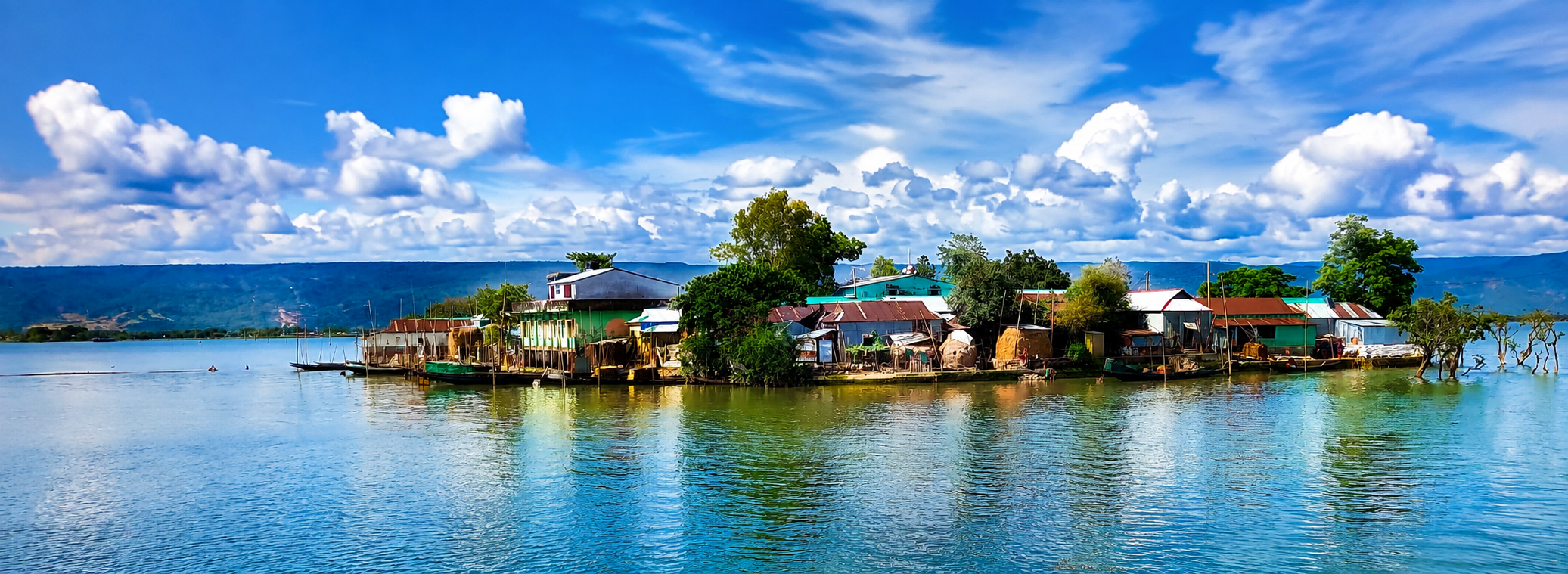
The region's greatest spectacle, however, is seasonal. In the winter months, the vast (HAOR) wetlands of Sylhet—shallow bowls of water the size of small seas—fill with hundreds of thousands of migratory birds from Siberia and Central Asia. At Tanguar Haor, a Ramsar-protected wetland, you can watch cranes, geese, and rare ducks wheel over a flooded landscape of tiny island villages. Birders call it one of Asia's great wintering grounds; everyone else just calls it breathtaking.
Dhaka: Controlled Chaos, Unforgettable Soul
Every trip to Bangladesh passes through Dhaka, one of the most densely populated cities on Earth—and no city better rewards the traveller willing to embrace it. Old Dhaka is a labyrinth of narrow lanes, Mughal-era mansions, and street food smoke. The Ahsan Manzil, a pink 19th-century palace of the Dhaka Nawabs, floats on the riverfront like a slice of another era. Lalbagh Fort, half-finished and yet somehow perfect, tells the bittersweet story of a Mughal prince's tomb. The Star Mosque, studded with blue star mosaics, glows after dark.
But the real spectacle of Dhaka is the street itself. More rickshaws ply these roads than anywhere else on the planet, every one of them a hand-painted work of folk art—and in 2023, UNESCO recognized Dhaka's rickshaw painting as an Intangible Cultural Heritage of Humanity. The rickshaw pullers of Dhaka are the city's pulse: take a ride at dusk, when the traffic is a river of lights and the call to prayer drifts over the rooftops, and you will understand why so many visitors fall hard for this chaotic, generous city.
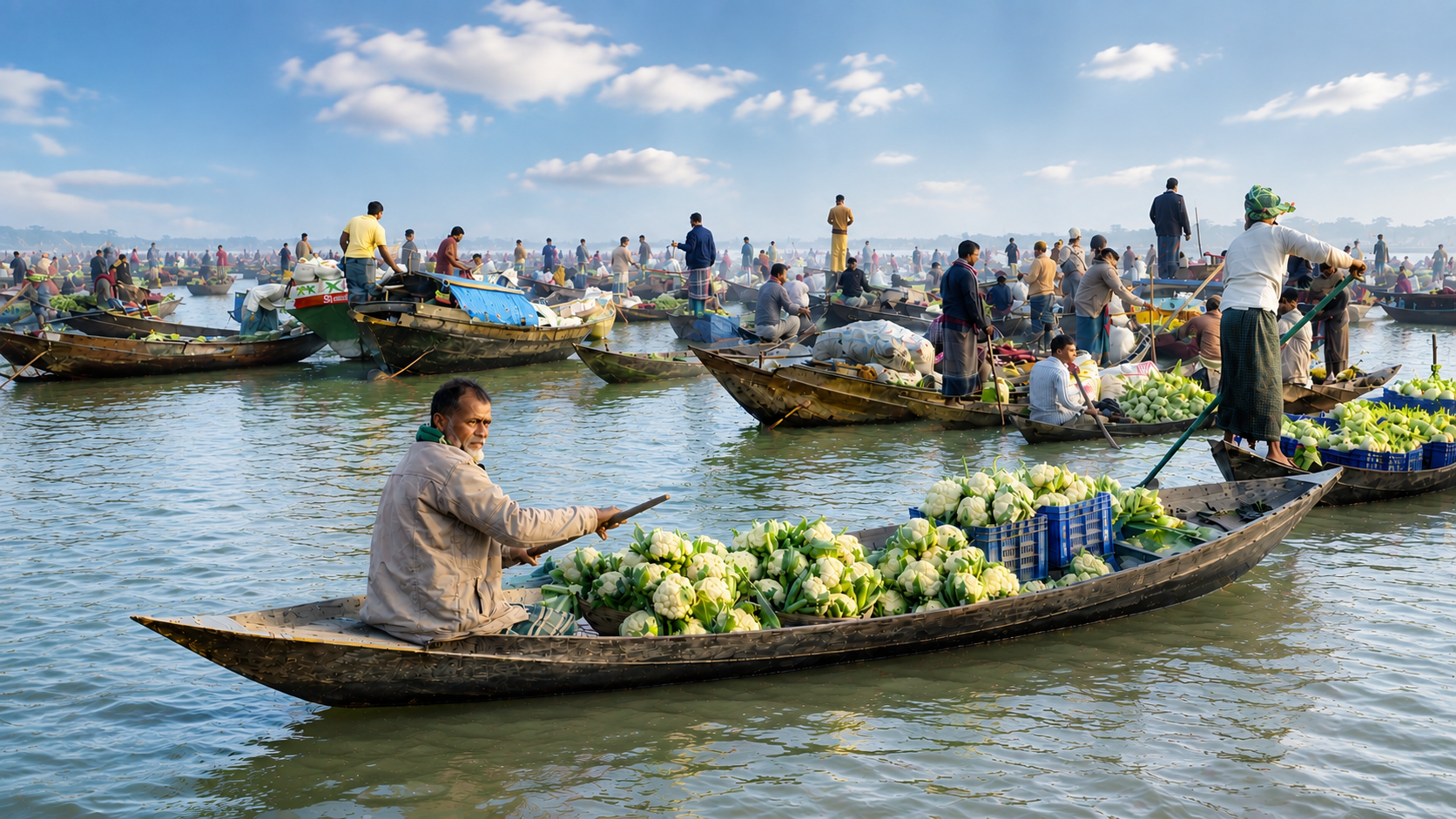
For a calmer side of the capital, the riverfront Sadarghat port is a spectacle in itself: thousands of wooden boats, ferries, and launches moving people and cargo along the Buriganga, the lifeblood of old Dhaka. Stand on the ghats at sunrise and watch a city wake up on the water.
A Thousand Years of HistoryBangladesh's history is far deeper than most travellers realise. In the southwestern town of Bagerhat, the Sixty Dome Mosque—Shat Gombuj Masjid—rises out of the flat delta landscape, a magnificent 15th-century masterpiece of terracotta and brick built by the saint-architect Khan Jahan Ali. It is a UNESCO World Heritage Site, and standing inside its dim, forest-of-columns prayer hall, you will feel the weight of 600 years.
In the north, at Paharpur, lies Somapura Mahavihara—the largest Buddhist monastery south of the Himalayas, built in the 8th century and once home to thousands of monks who drew scholars from across Asia. Also a UNESCO site, its vast terraced ruins and intricate stone carvings hint at a civilization of staggering sophistication.
Even older is Mahasthangarh, dating back to the 3rd century BC, making it the oldest archaeological site in Bangladesh — a citadel of the ancient Mauryan Empire. And at Mainamati, a low range of hills hides the remains of a 1,200-year-old Buddhist kingdom: temples, stupas, and shrines carved into the earth, with a small museum of exquisite gold and bronze artefacts.
Then there is the living heritage of the terracotta temples: Kantajew Temple in Dinajpur, an 18th-century masterpiece covered in more than 15,000 terracotta panels telling stories from the Hindu epics, and the temple complex at Puthia, a village that is effectively an open-air museum. For history lovers, Bangladesh is a feast—and nearly all of it is empty of crowds.
The Land of Rivers
Bangladesh is a country defined by water. More than 700 rivers thread through it, fed by the great Ganges, Brahmaputra, and Meghna, creating the largest river delta in the world. The people have lived with this water for millennia, building their lives on boats, islands, and silt that shifts with every monsoon.
The finest way to understand this is the Rocket — the century-old paddle-wheel steamer that still plies the rivers between Dhaka and the southwestern towns. Boarding the PS Ostrich-class steamer is like stepping into a colonial-era novel: teak panelling, slow churn of the paddle wheel, and days of drifting past riverside villages, ferries, and bird-filled sandbars. It is one of the great slow journeys of Asia — a floating time capsule.
For something quicker, take a country boat through the canals of the Sundarbans fringe, or watch the sunset from the riverbank at Barisal, where boats with painted eyes — the folk belief being that the eyes help the boats find their way — crowd the ghats. Bangladesh's rivers are not a backdrop; they are the country.
A Food Culture That Deserves a Journey of Its Own
Bangladeshi food is one of Asia's great undiscovered cuisines. In Dhaka, the legendary kacchi biryani — layers of fragrant basmati, tender mutton, potato, and saffron, slow-cooked over coals — is an institution worth building a trip around. The city's street food is equally legendary: fuchka, crisp hollow shells filled with spiced potato and tamarind water, eaten on the spot; jhalmuri, a crunchy puffed-rice snack tossed with mustard oil, chilli, and coconut; and borhani, a cooling yoghurt drink spiced with mint.
From the rivers comes hilsa, the national fish — a delicacy of such reverence that it is served in every form imaginable: smoked, fried, steamed in banana leaf, and cooked into a rich mustard gravy. Try it with panta bhat, the fermented rice dish that Bengalis eat at dawn on New Year's Day.
Then there are the sweets. Bangladesh — and the neighbouring Indian state of West Bengal — gave the world roshogolla (soft cheese balls in syrup), jilapi (crispy orange spirals), and dozens of milk-based desserts that will ruin desserts elsewhere for you. In Old Dhaka, sweet shops display their wares like jewellery. Plan to sample liberally; consider it research.
Festivals, Music, and the Art of Celebration
Bangladeshis know how to celebrate. The biggest event of the year is Pohela Boishakh—the Bengali New Year, celebrated each April—when the entire country dresses in red and white, the streets fill with processions, and dawn begins with panta bhat and fried hilsa. In Dhaka, students from the fine arts faculty lead the famous Mangal Shobhajatra procession, a riot of color and giant folk-art figures that UNESCO has also recognized as an intangible cultural heritage.
Music runs deep. The Bauls—wandering mystic minstrels of Bengal, whose songs UNESCO placed on the Intangible Cultural Heritage list—still sing their earthy, spiritual songs in village courtyards and at fairs. Their philosophy of simplicity and love resonates with anyone who has ever questioned the modern treadmill. You can catch Baul performances at the country's many rural fairs or in dedicated cultural evenings arranged by good tour operators.
And everywhere you go, you will encounter the fabric of Bengal: the handwoven Jamdani saris of Dhaka, so fine they are called "woven air" and are themselves a UNESCO heritage craft; the embroidered Nakshi katha quilts; the painted rickshaws; the pottery villages. This is a country that still makes things by hand, with pride, and it shows.
The People: Bangladesh's Greatest Treasure
Every traveller who returns from Bangladesh says the same thing: the people. Bangladeshis are, by common consent, the most welcoming and hospitable people you will ever meet. Bangladesh is a young, fast-growing nation—roughly 170 million people, most of them under 30—and the hospitality is astonishing. Expect to be invited to share tea. Expect strangers to help you when you look lost. Expect children to wave and call out "hello!"—the English they are most proud of. Expect to be photographed, yes, but with warmth, curiosity, and genuine delight rather than intrusion.
The late Nobel laureate Muhammad Yunus described Bangladesh as a nation of entrepreneurs, and you will see that resourcefulness everywhere: in the woman selling fish from a boat, in the boy polishing shoes, and in the shopkeeper who finds you a translator in thirty seconds. Travelling here is an education in resilience, resourcefulness, and human warmth.
Practical Realities: When to Go and What to Expect
Bangladesh is easy to love but requires a little preparation—which is exactly where a good tour operator earns its keep.
When to go: October to March is the golden season—cool, dry, and sunny. December and January are the most comfortable months for the South and the Hill Tracts. Avoid April to June's oppressive heat and the monsoon months of June to September, unless you want the dramatic (and genuinely spectacular) green of the flooded delta.
Getting around: Bangladesh is not built for self-drive. Domestic flights connect Dhaka, Cox's Bazar, Sylhet, and Jessore; trains are a wonderfully scenic (if unhurried) way to travel; and boats handle the delta. A reputable operator handles the logistics so you can focus on the experience.
Visas and entry: Most Western passport holders can secure a visa on arrival at Hazrat Shahjalal International Airport in Dhaka or arrange an e-visa in advance — always check with the nearest Bangladeshi embassy for current requirements.
Budget: Bangladesh is genuinely affordable. Western tourists will find their money goes very far here—comfortable hotels, excellent guides, and full meals for a fraction of what they would cost in Europe or North America.
The honest part: infrastructure is developing, traffic in Dhaka is legendary, and this is not a destination where everything runs on time. But that is precisely its charm. Travel here is real, textured, and unscripted—and the rough edges are part of what makes it memorable.
The Verdict
Bangladesh is the answer to a question more and more travellers are asking: where can I go that still feels undiscovered? Where is the history real, the wildlife wild, the food unmodernized, and the welcome genuine?
Here you will find the world's longest beach and its largest mangrove forest, 8th-century monasteries and rivers that are entire civilisations, tea hills and tiger country, floating markets and firework sunsets. You will find a nation of 170 million people eager to show you their home — not because they want your money, but because hospitality is woven into their culture.
You will also find yourself — the version of you that remembers what travel felt like before the bucket list and the grid.
Come to Bangladesh. Come before the world catches on. The country has been waiting for you.
Contact our team to start planning your Bangladesh journey—bespoke itineraries, expert local guides, and every detail handled, from tiger safaris to tea-country treks.